

The PGE Group's strategy until 2035 takes a comprehensive approach to ESG (Environmental, Social, Governance) aspects, treating them as the foundation for responsible energy transition and long-term value creation.

In June 2025, the PGE Group announced a new strategy for 2035, under the motto is ‘Energy for a Secure Future. Flexibility.’ It provides for investments in smart energy grids, new large-scale and flexible gas-fired power plants, renewable energy sources, storage facilities and integrated district heating systems.
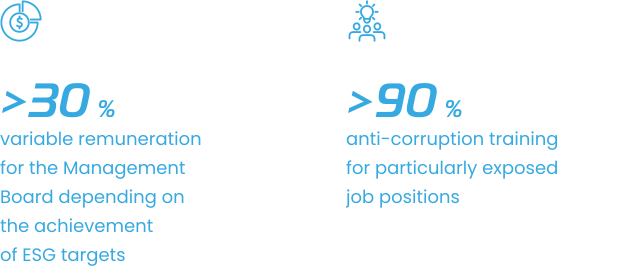
ESG goals in the PGE Strategy 2025-2035:
(E) ENVIRONMENT
Minimising the negative impact of operations on the environment and implementing initiatives contributing to environmental protection
- New dispatchable generating units
- Expansion of the RES portfolio
- Grid modernisation enabling more RES connections and less re-dispatching
- Implement biodiversity conservation and water management policy objectives
- Implement circular economy principles and reduce resource consumption

(S) SOCIETY
Support for the responsible transition of the Polish economy, care for employees and relations with communities
- Reducing the risk of energy price increases and strengthening security of supply
- Stable working conditions and a partnership based approach to local communities
- Engaging local authorities in planning a responsible transformation
- Supporting employee development and fostering their commitment

(G) CORPORATE GOVERNANCE
Standards of organisational management
- Organisational resilience and transparency
- Management of processes and organisational culture
- Principles of responsible ESG-compliant corporate governance
- Recognition of minority shareholders’ Rights

Sustainable development in the PGE Capital Group strategy
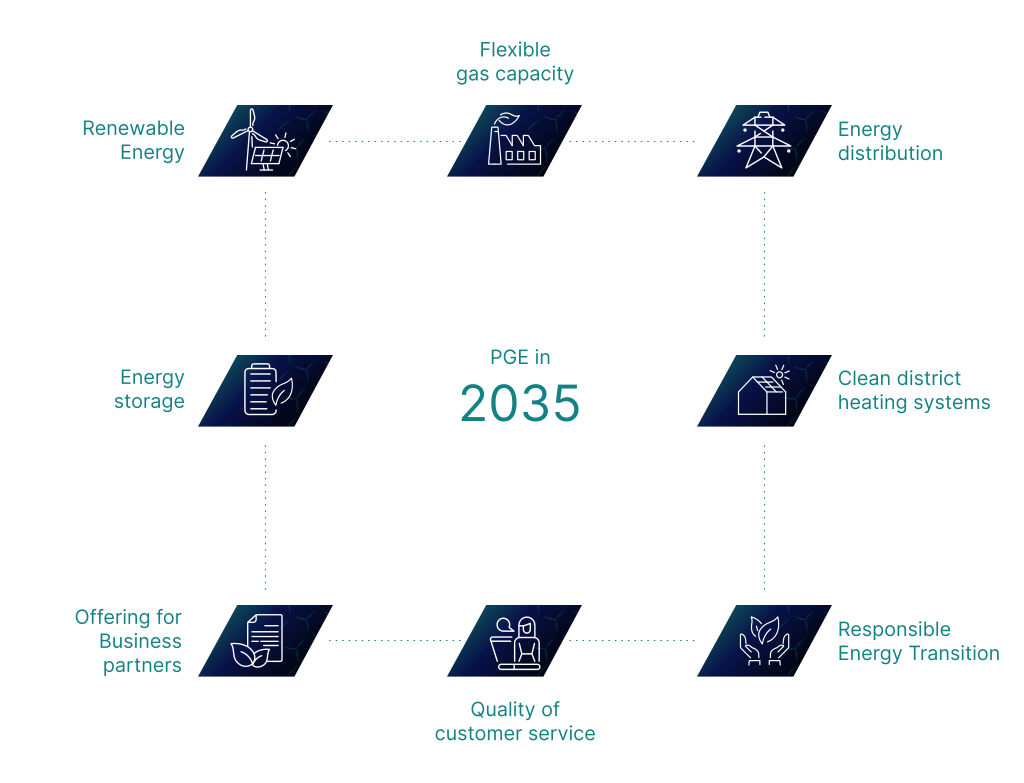
- development of renewable energy sources (RES): offshore and onshore wind farms, photovoltaics and hydropower
- 28 TWh of clean energy for a competitive economy
- construction of new gas units, replacing coal with gas
- gas units supporting RES (backup for unstable sources)
- 100% readiness to switch to zero-emission fuels
- ensuring the stability of the energy system to enable the development of renewable energy sources
- digitalisation and automation of the grid (smart grids) – efficient energy management and integration of distributed sources
- ensuring the stability of the energy system enabling the development of RES
- digitisation and automation of the grid (smart grids) – effective energy management and integration of distributed sources
- responsible approach to changing the generation mix while respecting the role of employees (including responsible HR policy, career continuity, retraining, protection programmes) and local communities
- Circular economy (reclamation, partnerships and new technologies, effective waste management, UPS management, responsible consumption, net RecEx = PLN 0)
- Low- and zero-emission large-scale projects
- Electrification based on clean energy
- Decrease in CO2 emissions
- transformation of generation assets (decommissioning of coal-fired heating units)
- 60% reduction in CO2 emissions by 2035
- reduction in NOx emissions and water consumption
- facilitating rational use of energy and distribution services by customers
- supporting customers in managing energy storage facilities, PV installations and heat pumps
- consulting on energy transition planning
- energy and energy-related offer (green energy – the option to choose electricity and heat from renewable sources; virtual prosumer – a platform enabling participation in renewable energy production without the need to physically own an installation; customer applications enabling consumption tracking, report generation and presentation of recommended actions to achieve savings)
- opportunity to participate in the flexibility market – participation in the energy transition by supporting system stability (aggregated portfolio of individual customers)