
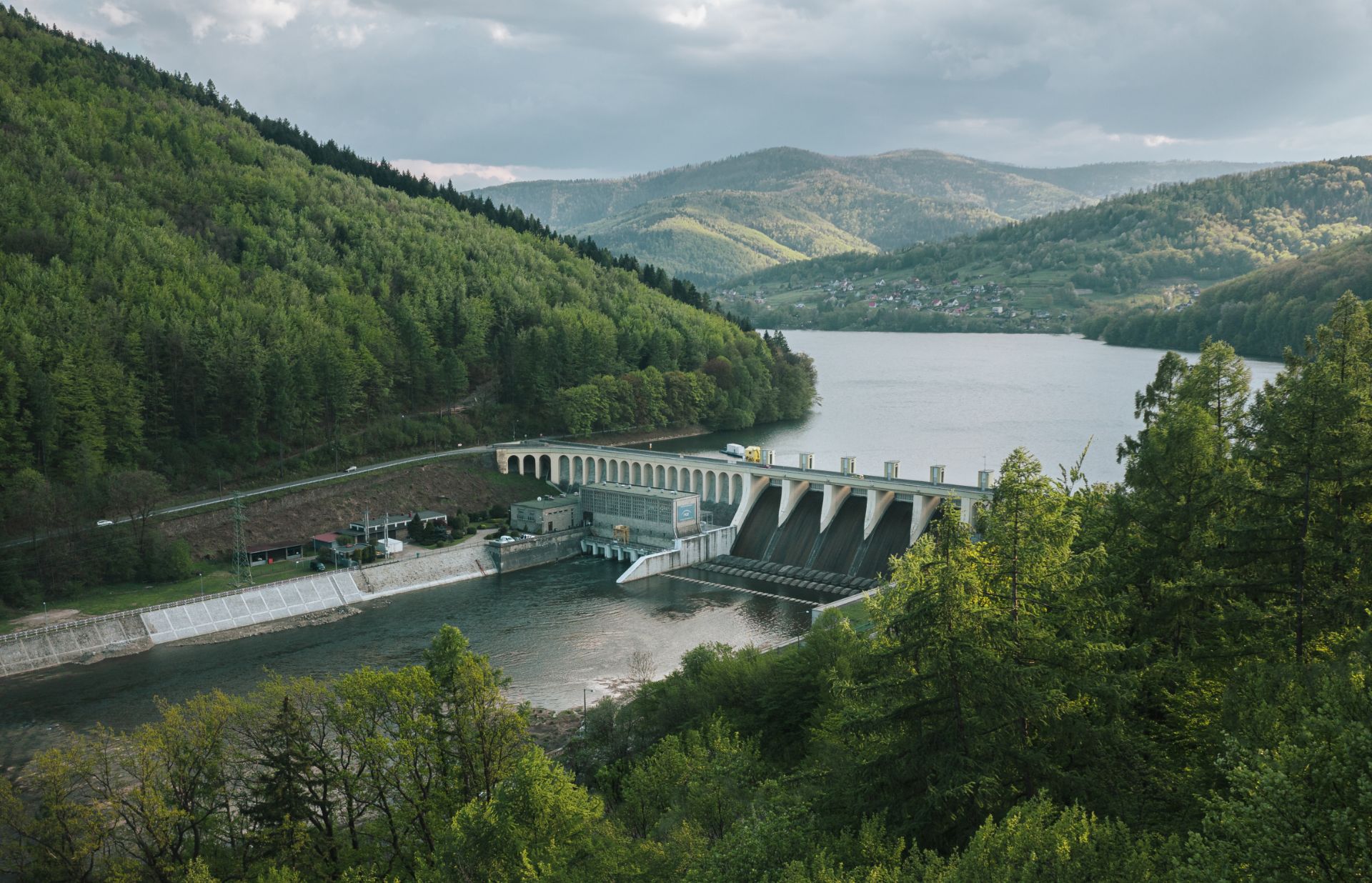

PGE CG companies carry out ongoing operational activities, including the monitoring of processes related to emissions into air, water and soil, in accordance with the provisions set out in the integrated permits and sector-specific decisions issued for individual installations within the Group. These decisions specify detailed requirements regarding the conduct of measurements (including methodologies, frequency of measurements, and measurement points).

The methods used to measure pollutants emitted into the soil, as well as the procedures and frequency for testing soil, land and groundwater contamination, including sample collection, are implemented in line with the applicable provisions of the Integrated Permit.
In accordance with Article 217a of the Environmental Law, integrated permits specify the method and frequency of soil and land contamination testing for substances posing a risk. As stipulated in the Environmental Law, such tests must be conducted at least once every 10 years. The soil and land tests carried out in 2024 pursuant to the above-mentioned provisions confirmed that the permissible limit values set out in the Regulation of the Minister of the Environment of 1 September 2016 on the method of assessing soil surface contamination (Dz. U. [Journal of Laws] 2016, item 1395) were not exceeded. This indicates that the tested substances complied with the criteria for the relevant soil group and no release of contaminants into the soil occurred.
Air pollutant emissions reported to the PRTR from PGE CG companies (limited to companies exceeding the threshold specified in Annex II to the PRTR Regulation).
Data for locations affected by exceedances within: PGE GiEK S.A. PGE Energia Ciepła S.A., KOGENERACJA S.A., Elektrociepłownia „Zielona Góra” S.A., PGE Toruń S.A. and PGE Gryfino Dolna Odra.
Quantity of water pollution reported under the PRTR (exceeding the threshold set out in Annex II to the PRTR Regulation).
Data for locations affected by exceedances within: PGE GiEK S.A. PGE Energia Ciepła S.A., Elektrociepłownia „Zielona Góra” S.A.
In 2024 at the locations: PGE Energia Ciepła S.A. (Gorzów Branch, Pomorzany Branch, Rzeszów Branch) and PGE GiEK S.A. (Bełchatów Power Plant Branch, Dolna Odra Power Plant Branch, Opole Power Plant Branch) soil tests took place, which did not indicate any exceedances.
PGE GIEK S.A.
Each of the 12 power units at Bełchatów Power Plant (units 2–12 and unit 14) is equipped with a full set of systems designed to reduce atmospheric emissions. Currently, all units are fitted with flue gas desulphurisation systems using the wet limestone-gypsum method, which achieves 95% efficiency. The gypsum produced by this process is a fully marketable product, with properties comparable to natural gypsum, and is widely used in the construction sector. Every unit at Bełchatów Power Plant is also equipped with electrostatic precipitators that capture dust generated during coal combustion. The dust removal efficiency reaches 99.6%. To limit nitrogen oxide emissions, Bełchatów Power Plant applies primary NOx reduction methods by optimising the combustion process in each boiler. In addition, high-efficiency secondary denitrification systems using the SNCR method have been installed on units 2–5, 7, and 9. No incidents resulting in permanent soil contamination have occurred on the site of the power plant.
Opole Power Plant is equipped with an automated air emissions monitoring system that enables continuous measurements of pollutant emissions from the boilers of units 1 to 6. The monitored substances include total dust, SO₂, NOₓ, CO, Hg, NH₃, HCl, and HF. The system works in conjunction with a computerised platform that collects, displays, and archives data, determines total emissions from all units, and verifies compliance with emission standards. In addition to the continuous monitoring on units 1–6 and the auxiliary boiler house, periodic emissions measurements are also carried out by an external contractor in accordance with applicable methodologies.
The plant monitors both the volume and quality (across 33 parameters) of wastewater discharged from its treatment facility, in line with its integrated permit. Moreover, the quality of the Odra River is tested twice a year – both upstream and downstream of the wastewater discharge point.
Water intake and wastewater discharge are monitored using the PROMAN computer system.
In 2024, no incidents resulting in permanent soil contamination occurred at the Opole Power Plant. The plant’s water consumption and wastewater discharge levels remained within the limits specified in its integrated permit.
At the Turów Power Plant, continuous monitoring of gas and dust emissions is conducted. Each operational generating unit is equipped with two independent measurement systems, referred to as the settlement and technological systems. These continuous emission monitoring systems (CEMS) are subjected at least once a year to procedures in line with the PN-EN 14181 standard (AST), as well as full calibration and validation procedures in accordance with PN-EN 14181 (QAL 2). The plant continuously measures the concentrations of SO₂, NOₓ, dust, CO, HCl, HF, Hg, NH₃, and CO₂, as well as key flue gas parameters including moisture content, flow rate, temperature, and oxygen levels.
Pollutant emissions of SO₂, NOₓ, CO, dust, Hg and NH₃ are measured through continuous monitoring, while HCl, HF, PM10, SO₃, and metals and metalloids are monitored through periodic measurements.
Data for accounting and reporting purposes is collected monthly. Emissions data for key pollutants is sourced from reports generated by the flue gas continuous monitoring system. Emissions of other pollutants are calculated using emission factors and data on fuel consumption and flue gas flow rates.
Monitoring of waterborne pollutants is based on wastewater flow meters and measurement systems. Data for accounting and reporting is also collected monthly, based on monitoring system reports and laboratory test results.
In 2024, no contaminated land was identified at the Rybnik Power Plant site, nor were there any incidents or failures that resulted in the release of hazardous substances into the environment.
The methodologies for measuring air pollutant emissions comply with reference methods. Data is collected through a continuous monitoring system that meets the requirements of the PN-EN 14181 standard, as well as through periodic measurements.
The methodologies for measuring water pollutant emissions follow the reference methods specified in the relevant regulation. Continuous monitoring is carried out in accordance with procedures established under the ISO 9001 system. Data is collected in both paper and electronic form. There are no specific requirements concerning soil contamination under the Dolna Odra Power Plant.
The branches do not exceed the thresholds for releases to air, water and soil specified in their permits.
Bestgum
The methodologies for measuring air pollutant emissions follow the reference methods specified in the permit.
PGE Energia Ciepła S.A. and the companies: Kogeneracja S.A., Elektrociepłownia Zielona Góra S.A., PGE Toruń S.A.
The relevant emission parameters are continuously monitored based on coefficients determined from measurements carried out by accredited entities, emission standards defined in accordance with applicable legislation and administrative decisions, as well as emission levels indicated by continuous monitoring systems and periodic measurements. The measurement methodologies are based on legal regulations, administrative permits, and civil contracts. Emission data is collected and processed in accordance with internal procedures concerning environmental statistics and reporting.
In locations where initial baseline reports have been prepared, periodic control tests are carried out, confirming the absence of soil contamination.

PGE Energetyka Kolejowa S.A., PGE Energetyka Kolejowa Holding Sp. z o.o., PGE Energetyka Kolejowa Obsługa Sp. z o.o., PGE Energetyka Kolejowa Centrum Usług Wspólnych Sp. z o.o.
The companies are not subject to reporting obligations under Regulation (EC) No 166/2006 of the European Parliament and of the Council concerning the establishment of a European Pollutant Release and Transfer Register (E-PRTR).
The main pollutants released into the air as a result of the companies’ own operations include: carbon monoxide, ammonia, non-methane volatile organic compounds, nitrogen oxides, sulphur oxides, arsenic, cadmium, chromium, copper, mercury, nickel, lead, zinc, hexachlorobenzene, ethylbenzene, phenols, polycyclic aromatic hydrocarbons, toluene, xylenes, and suspended particulate matter (PM10).
No substances listed in the above-mentioned Regulation are discharged into water.
Rainwater may contain pollutants such as total suspended solids and petroleum hydrocarbons. Additionally, in the event of an emergency, there is a risk of oil (petroleum hydrocarbons) leakage from power equipment and infiltration into soil.
Pollutant emissions are not metered, as they originate from small emission sources or are of a diffuse nature, and the threshold values set out in Annex II of the Regulation have not been exceeded.
PGE Paliwa Sp. z o.o., Elmen Sp. z o.o., ESP Sp. z o.o., PGE Ekoserwis S.A., Zower Sp. z o.o., PGE Systemy S.A., PGE Obrót S.A., Ensta Sp, z o.o. (in restructuring)
The activities of these companies, due to their business profile, do not generate significant emissions of pollutants into the air and do not cause water or soil pollution.