


Information on water consumption and abstraction, as well as the water intensity ratio and other water-related indicators.
1 Conventional Generation: The figures are based on flow meters for reuse in wet desulphurisation systems (IMOS), on the operating time of pumps in ash spraying systems as part of ash conveying and storage processes, and on the operating time of pumps in systems returning treated wastewater to the main cooling system; in some cases, data are estimated. The value is the sum of the quantity of water reused in the different technological processes. District Heating: Estimate, no measurements, results from average recycled material flows.
2 Conventional Generation: As far as possible and depending on current conditions and needs, the tanks are kept at a level close to maximum capacity, and therefore any fluctuations at the end of individual reporting periods are small and practically negligible. The amount of water stored in the reservoirs refers to their nominal capacity, which is maintained at the upper levels of their capacity under normal operating conditions. District Heating: The tanks are constantly kept at 70–90% full. PGE EO: The amount of water stored varies depending on production and demand in the National Power System. The water storage volume is based on the maximum capacity of the tanks. PGE Ekoserwis, Railway Energy Services – fire water tanks.
3The water use for production purposes is determined based on the readings from the measuring devices, where:
Conventional Generation: Data resulting from direct flow measurements (total amounts) on the discharge pipes of pumping stations at surface water withdrawals and totalisers on the drinking water withdrawals system and the water withdrawals systems of the entities. The value represents the difference between the total amount of water abstracted and the amount of water sold to other entities.
District Heating: The total water consumption in all areas was calculated on the basis of the data from the records of water withdrawals and discharge in 2024. Water consumption is defined as the difference between the amount of water abstracted and the amount of water/wastewater discharged.
The different combustion plants draw water for their technological and sanitary needs from the mains and/or the environment. After appropriate treatment, the resulting process, sanitary, and rainwater from the plant area, where required, are discharged into the municipal combined sewer system and/or the environment. Wherever possible, some of these streams are recirculated. The quantity and quality of the water withdrawals and wastewater discharge are monitored to ensure compliance with the conditions (as required by law and in accordance with integrated permits and water permits).
4District Heating: The data were collected according to the specific operation of the different installations. For water abstracted from the water supply, the quantities abstracted were converted on the basis of meter readings, including contracts. For surface water, the quantities abstracted were based on current reporting and water abstraction records, and other regulatory reporting.
Railway Energy Services: In Railway Energy Services, no processes are carried out that would result in water consumption as defined in Commission Delegated Regulation (EU) 2023/2772 of 31 July 2023 supplementing Directive 2013/34/EU of the European Parliament and of the Council with regard to sustainability reporting standards.
PGE Gryfino Dolna Odra sp. z o.o.: The data refers to the periods following the commissioning of the different units.
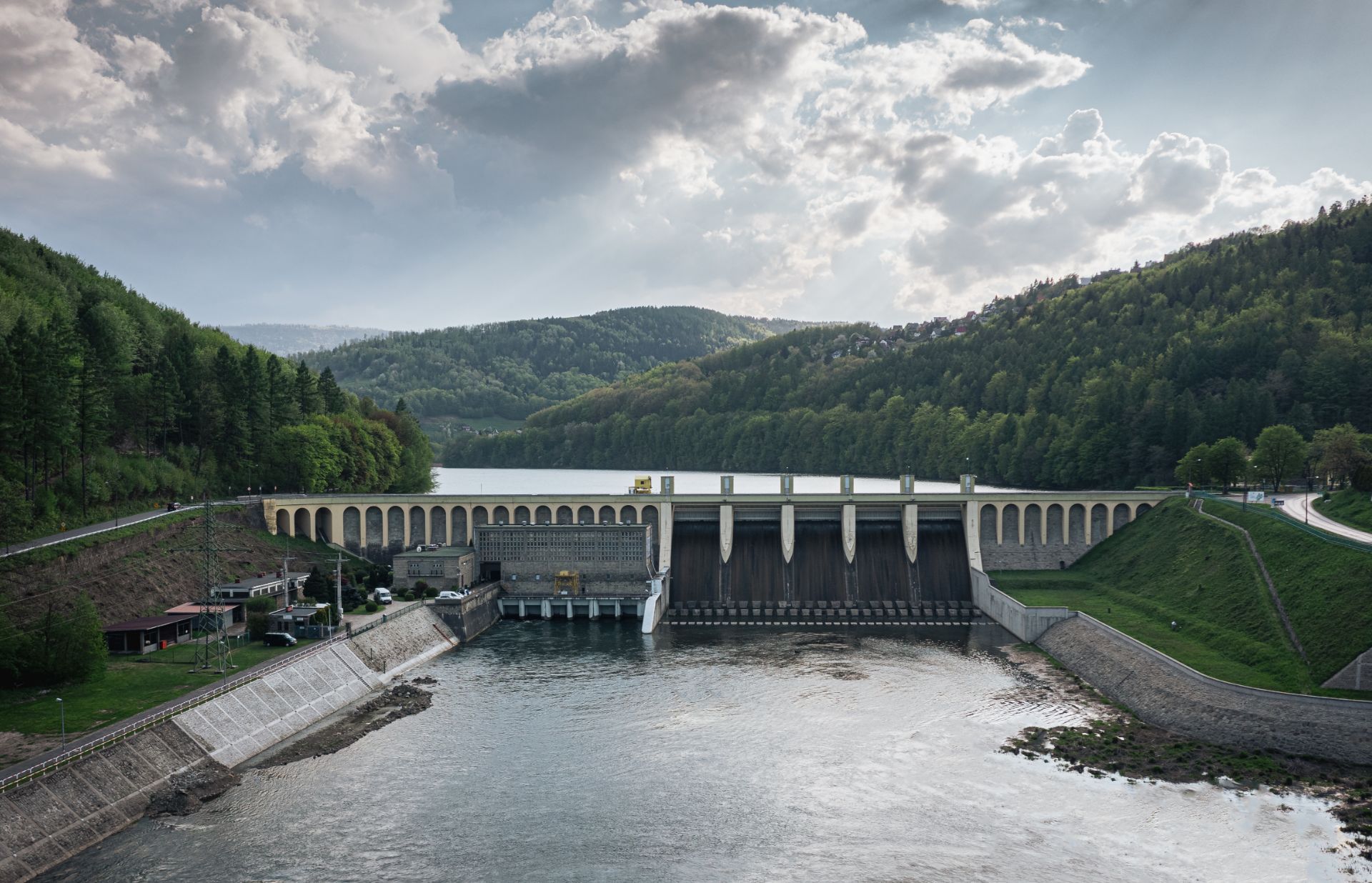
*Water abstraction – approximately 75% of the stated volume of water withdrawals in the PGE CG is used for the operation of small hydropower plants owned by PGE Energia Odnawialna S.A. (kinetic energy of rivers is used to generate electricity. The water flowing through pipes or channels strikes a turbine which rotates and transfers mechanical energy to a generator, which produces electricity. The same amount of water is then released back into the environment in the same condition). The share of small hydroelectric power plants in the total water discharge of the PGE CG is approximately 79%.