


Important points: Privacy; Access to (quality) information; Health and safety; Security of a person; Access to products and services; Responsible marketing practices.

The key companies of the PGE Group providing services to individual customers are primarily: PGE Obrót S.A., PGE Dystrybucja S.A. and PGE Energia Ciepła S.A.
PGE Obrót S.A., responsible for electricity sales within the PGE Group, served over 5.7 million customers in 2024, who purchased nearly 31 TWh of electricity from the company.
PGE Dystrybucja S.A., a company holding a licence for electricity distribution and providing electricity delivery services within the PGE Group, delivered over 36 TWh of electricity in 2024 across an area of 129.9 thousand sq km (almost 40% of Poland’s territory), connecting nearly 80.7 thousand customers and over 78 thousand prosumer installations to the grid.
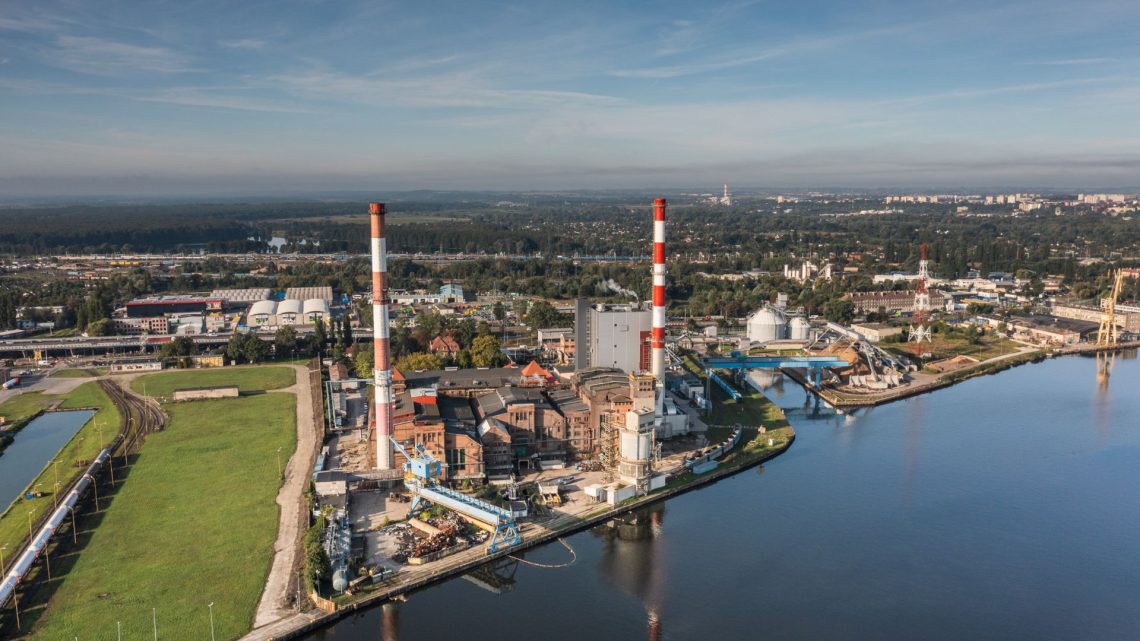
PGE Energia Ciepła S.A. is the largest producer of heat and electricity in Poland, generated in the process of high-efficiency cogeneration. It holds approximately 25% of the cogenerated heat market share, operates 16 CHP plants (with a thermal capacity of 6.22 GWt and an electrical capacity of 2.48 GWe), and has heating networks totalling 725 km in length. PGE Energia Ciepła S.A. produces and supplies heat to major Polish cities including: Kraków, Gdańsk, Gdynia, Wrocław, Rzeszów, Lublin, Bydgoszcz, Kielce and Szczecin. The company is also present in Toruń, Zielona Góra, Gorzów Wielkopolski, Zgierz, Siechnice and Gryfino, where it also acts as a distributor of heat to end customers. According to the adopted Decarbonisation Plan, from 2030 heat in the CHP plants of PGE Energia Ciepła S.A. will be produced exclusively from low- and zero-emission sources.
The PGE Group conducts consumer-related activities throughout Poland, with particular focus on the so-called historical area (i.e. the eastern part of Poland), for which PGE Dystrybucja S.A. acts as the distribution system operator and PGE Obrót S.A. as the traditional electricity supplier.
In the process of selecting PGE Group companies to be covered by ESRS S4 disclosures, three companies were identified as key for disclosure: PGE Obrót S.A., PGE Dystrybucja S.A. and PGE Energia Ciepła S.A. The following criteria were applied to select the companies relevant for reporting:
- provision of core offering to consumers or end-users; and
- share in the total number of consumers and end-users served by the PGE Group companies above 1%.
The total share of the identified companies in sales to consumers within the PGE Group exceeds 99%.
The PGE Group is aware of its impact on consumers and end-users. As part of the double materiality assessment, a significant positive impact has been identified in the areas of:

At the same time, both positive and negative impacts of the PGE Group’s operations on consumers and end-users have been identified in the following areas:
- privacy – in relation to the processing of personal data,
- health and safety – in relation to the ability to influence the source of product origin and the conduct of high-emission activities, particularly regarding emissions to air,
- and security of a person– in relation to the safety of the products and services offered.
A detailed description of actions regarding impacts on consumers and end-users of the Group has been presented in section S4-4.
From the perspective of the influence of consumers and end-users on the strategy and business model of the PGE Group, the Group observes the growing role of a decentralised energy system. Customers are increasingly investing in their own renewable energy sources, which changes the way the electricity grid is managed and stimulates the development of products such as energy storage, smart meters, and heat pumps. The actions of consumers and end-users in this regard stem, among other things, from their growing awareness of sustainable consumption. The increasing number of prosumers and the demand for environmentally friendly products affect PGE’s business model not only in terms of the shift from traditional energy sales to the management of distributed energy, but also in the expansion of its product and service portfolio and investments in renewable energy sources and grid infrastructure.
In the various areas of activity of the PGE Group, different types of consumers and end-users can be distinguished who are subject to significant impacts from the Group’s own activities, including:
- consumers or end-users of products which are by their nature harmful to humans or increase the risk of chronic diseases,
- consumers or end-users of services which may potentially negatively affect their right to privacy, personal data protection, freedom of expression, and non-discrimination,
- consumers or end-users who require accurate and accessible information about a product or service, such as user manuals and product labels, to avoid potentially harmful use of the product or service,
- consumers or end-users who are particularly vulnerable in terms of health or privacy or susceptible to the influence of marketing and sales strategies – such as children or people in financial distress.

The negative impacts of the PGE CG in the area of consumers and end-users concerning privacy and security of a person are of an incidental nature. The PGE Capital Group, acting in accordance with applicable regulations, enters into agreements with consumers. The negative impact in the area of privacy concerning consumers is related, among other things, to the risk of data leakage or unauthorised use of information. The Group is exposed to threats from cyberattacks. To mitigate negative impacts, the PGE CG implements centralised solutions in the fields of personal data protection, ICT security, and incident management.
The energy services offered by the PGE Group are not harmful to humans, provided that they are used appropriately. Negative impacts in the area of security of a person may arise in the case of failures of infrastructure owned by PGE CG companies or due to the improper use of energy by the Recipient. This primarily concerns the improper operation of consumer devices or internal installations, which are beyond the influence of the PGE CG (responsibility lies with device suppliers and entities providing services related to internal installations). From this perspective, it is not necessary for PGE CG companies to issue user manuals and warnings addressed to consumers, except for warnings placed on network infrastructure devices secured against third-party access. PGE CG companies carry out educational activities related to the proper use of energy.
The PGE CG has also identified a negative impact on consumers and end-users in the area of health and safety due to its high-emission activities, in particular regarding emissions to air. The Group manages these significant negative impacts through investments in renewable energy sources. These are long-term actions.
In the area of electricity trading activities, the following types of consumers and end-users have been identified as having significant impacts, in particular:
- household electricity consumers connected to the energy grid owned by PGE Dystrybucja S.A.,
- household electricity consumers connected to an energy grid not owned by PGE Dystrybucja S.A.,
- household consumers using district heating produced by PGE Energia Ciepła S.A. and its subsidiaries, and delivered directly where these companies act as district heating network operators,
- vulnerable consumers who are party to a bundled agreement,
- consumers requiring special care in service: persons with disabilities, elderly persons, and pregnant women,
- recipients classified as consumers, and end-users in households based on an electricity sales agreement (TPA – Third-party Access). In the field of electricity distribution services, consumers are segmented into tariff groups based on specific criteria, including voltage levels, contracted power, and the characteristics of the supplied facility.
In most cases, household electricity consumers are customers who have concluded a bundled agreement with the energy supplier (approximately 95%). This type of agreement is commonly used in consumer trade and is the only legally permissible agreement for new contracts. Under this agreement, the supplier sells electricity and ensures its delivery to the consumer through the distributor.

The remaining consumers are those who have concluded a separate energy sales agreement with the supplier and a separate agreement for distribution services with the distributor – i.e. electricity sales and distribution are carried out by two separate entities: the supplier and the distributor (separate TPA agreements).
It should be emphasised that, in the area of distribution services, segmentation is defined by legal regulations. PGE Dystrybucja S.A., in accordance with applicable regulations, treats all consumers equally and does not apply segmentation in the marketing sense.